
Medical Travel, Money, and Trust
How cost, culture, and community shape the new health mobility—and why destinations compete on predictability, protection, and perceived safety before arrival.
Medical tourism is often framed as a global trend driven by luxury, convenience, or adventure. For many Black, working-class, and middle-income communities, it is something far more basic. It is adaptive.
Medical travel emerges where cost pressure, access gaps, cultural mistrust, and economic reality intersect. People do not leave domestic healthcare systems because they want to—they leave because staying has become financially and emotionally unsustainable.
Cost Is Not a Preference — It Is a Constraint
For middle-income earners and below, healthcare decisions are rarely clinical alone. They are financial. Rising deductibles, underinsurance, and employment-linked coverage gaps disproportionately affect Black households, gig workers, the self-employed, and caregivers supporting extended family.
When access is conditional on income stability many do not have, medical tourism becomes a pathway to care—not a luxury alternative. People are not comparing hospitals in theory. They are doing math.
Cost Reality: Example Price Ranges (Approximate)
| Procedure | United States | Dominican Republic | Mexico | Turkey | Colombia |
|---|---|---|---|---|---|
| Cosmetic surgery (BBL / Tummy Tuck) | $20K–$30K | $6K–$9K | $7K–$10K | $5K–$8K | $6K–$9K |
| Hair transplant | $8K–$15K | $3K–$6K | $3K–$5K | $2K–$4K | $3K–$6K |
| Dental implants (full arch) | $25K–$40K | $8K–$12K | $6K–$10K | $5K–$9K | $7K–$11K |
| Wellness / recovery stay (2–3 weeks) | $8K–$15K | $3K–$6K | $3K–$7K | $4K–$8K | $3K–$6K |
Timing Matters: When People Travel for Care
Medical tourism follows economic cycles—not just health needs. Peak travel consistently aligns with income tax refunds, paid leave windows, and end-of-year financial resets.
- February–April: Tax refunds as informal healthcare financing
- June–August: Summer flexibility and school breaks
- December–January: Bonuses, PTO, and personal resets
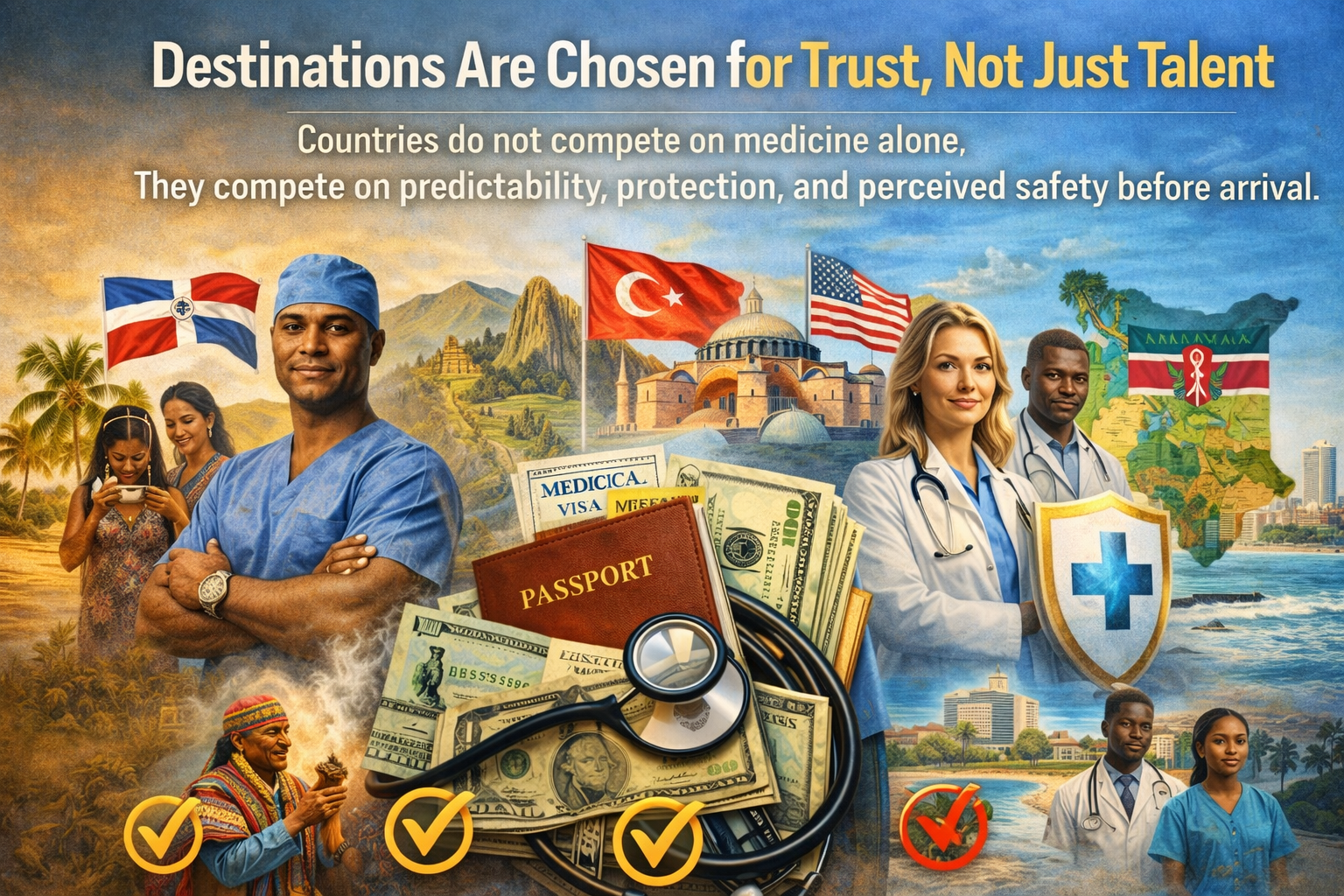
Destinations Are Chosen for Trust, Not Just Talent
The Dominican Republic thrives in cosmetic tourism through surgeon reputation and diaspora networks, not national policy. Peru draws alternative and spiritual healing travelers through cultural narrative and facilitator credibility. Turkey dominates elective procedures by combining policy, visas, accreditation, and branding. Florida attracts international patients seeking maximum legal and insurance protection despite higher cost.
Kenya illustrates the gap: strong clinicians and facilities exist, but fragmented policy and insurance frameworks limit scale. Countries do not compete on medicine alone—they compete on trust before arrival.
Men as a Growing Segment
Men—particularly Black men—are an increasingly visible force in medical tourism. Hair restoration, dental repair, sports injuries, and preventive diagnostics are often excluded from insurance despite meaningful quality-of-life impact.
Diaspora Economics: When Care Moves Money
Medical tourism is also a form of diaspora economics. Spending abroad supports recovery houses, drivers, caregivers, small pharmacies, and wellness providers. Care spending often overlaps with remittance systems, circulating dollars through trusted local networks.
What This Means for The Modern Green
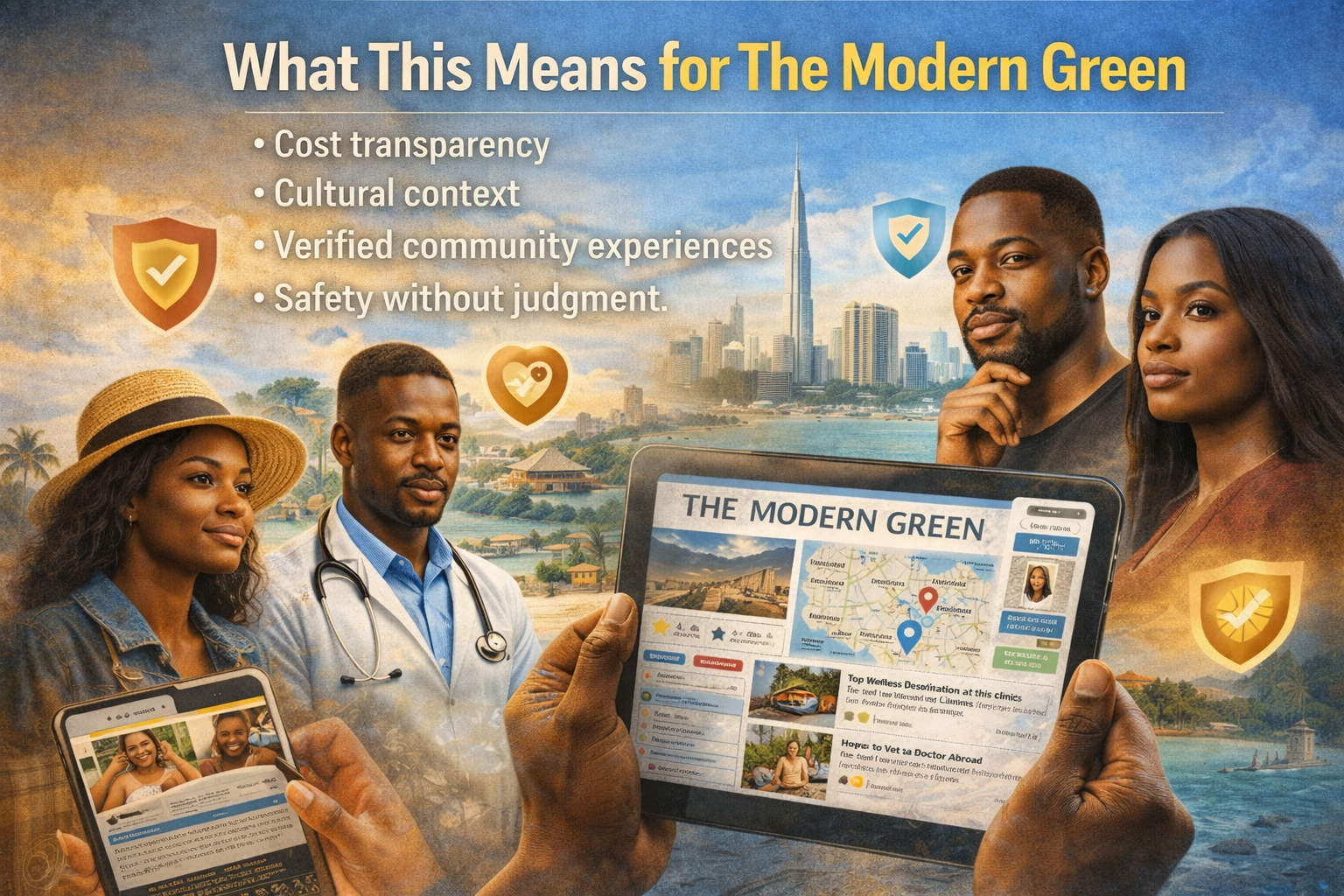
The Modern Green does not promote “cheap healthcare.” It documents how people navigate health under constraint—centering cost transparency, cultural context, real traveler experience, and safety without judgment.
Access without trust is not access at all.
Understanding that reality is not radical. Ignoring it is.

Author: David
Founder of The Modern Green connecting travelers with trusted local experiences worldwide. “We gon’ take you all around the world.