The Modern Green

Welcome to our Blog!

Safety

Why Trust Networks Matter More Than Police Presence Abroad

Why Trust Networks Matter More Than Police Presence Abroad | The Modern Green The Modern Green Luxury travel intelligence • Trust networks • Diaspora perspective Home Explore Events About Modern Green Editorial Why Trust Networks Matter More Than Police Presence Abroad Rethinking what “safety” really means internationally—through community connection, local guides, and diaspora-informed cultural context. By David Sims • Founder & CEO Security Professional • Veteran • Global Traveler Explore The Modern Green → Browse Destinations & Vendors → Introduction: Rethinking What “Safety” Really Means Abroad When many Americans travel internationally, safety is often imagined through a familiar lens: police patrols, armed checkpoints, and visible authority. The assumption is simple—where police presence is strong, travelers are protected. But seasoned travelers, expatriates, and security professionals know this belief is often misleading. Across much of the world, police presence is reactive, limited, or symbolic, while real day-to-day safety is maintained through trust networks—the informal, relationship-based systems that quietly prevent harm before it happens. For Black travelers in particular, these trust networks are not optional—they are essential. At The Modern Green, we believe safety abroad starts with community connection, not just official infrastructure. 👉 Explore how trust-based travel works: themoderngreen.com Why Police Presence Abroad Is Often Overestimated Official travel guidance quietly supports this reality. The U.S. State Department’s Overseas Security Advisory Council (OSAC) emphasizes situational awareness, local knowledge, and personal responsibility over reliance on immediate police intervention (OSAC). Similarly, the UK Foreign Office encourages travelers to seek local advice and understand cultural context rather than assume police will provide rapid or personalized protection (UK FCDO). Language and cultural barriers Limited jurisdiction over tourists Delayed response times Bureaucratic or political constraints Inconsistent enforcement standards Police typically document incidents after harm occurs. Trust networks reduce the likelihood that harm occurs at all. Visual reminder: safety abroad is often more relational (trust networks) than institutional (police visibility). What Are Trust Networks? (And Why They’re So Effective) Trust networks are informal systems of safety and accountability built through relationships rather than institutions. They include barbers and salon owners, taxi drivers and local guides, hotel staff and hosts, restaurant owners, community elders, and diaspora connections. Sociologists refer to this as social capital—the networks that enable communities to function effectively and protect their members (World Bank – Social Capital). Lower crime rates Faster conflict resolution Greater informal monitoring Higher levels of mutual aid In simple terms: people protect what they recognize. The Diaspora Travel Reality Most Guides Don’t Talk About Black travelers often navigate safety abroad using instincts shaped by lived experience. Across Africa, the Caribbean, Central America, and Latin America, familiar patterns emerge: a barber warns you away from a risky nightlife area; a taxi driver refuses to drop you in an unsafe neighborhood; a restaurant owner calls ahead to confirm a venue; hotel staff discreetly look out for you after hours. These moments rarely appear in guidebooks, yet they are how many travelers stay safe. Anthropologist Edward T. Hall described many of these societies as high-context cultures, where meaning, safety, and trust are communicated through relationships rather than formal rules (High-Context Cultures). This is why diaspora knowledge matters—and why culturally informed travel platforms are necessary. A Security Professional’s Perspective: Why Trust Networks Work From a security standpoint, trust networks are not informal alternatives—they are foundational layers of effective safety systems. In military and diplomatic operations, understanding the human terrain is as critical as understanding physical security infrastructure. Informal intelligence, local relationships, and community awareness consistently outperform surveillance alone. Neighborhood watch programs Community guardianship Informal intelligence sharing among business owners As a security professional and veteran, I’ve seen repeatedly that the most effective safety systems are predictive, not reactive. Trust networks detect risk early—before uniforms are ever needed. Why Trust Networks Matter Especially for Black Travelers Black travelers often face added layers of visibility, assumption, and misinterpretation abroad. Trust networks help humanize travelers within local communities, reduce isolation and targeting, provide social legitimacy and protection, and improve overall travel experience—not just safety. This is not about fear. It’s about moving with awareness. Platforms like The Modern Green exist to help travelers move smarter, not smaller. How The Modern Green Turns Trust Networks Into Travel Intelligence The challenge is that trust networks are often fragmented—passed quietly through word-of-mouth or private group chats. The Modern Green organizes this knowledge by highlighting community-verified vendors, featuring trusted local hosts and connectors, centering diaspora experience and cultural context, and encouraging traveler-to-traveler validation. We are not replacing government advisories or law enforcement. We are complementing them with real-world insight. 👉 Explore trusted destinations, vendors, and travel intelligence: themoderngreen.com/explore Redefining Safety Abroad Police presence may deter certain crimes, but it does not guarantee personal safety—especially for travelers navigating unfamiliar cultural landscapes. Trust networks are ancient, effective, and human. They operate quietly, relationally, and with a depth of understanding no patrol schedule can replicate. The safest place abroad isn’t where the police are most visible. It’s where people know who you are—and care that you’re there. © The Modern Green • Editorial themoderngreen.com  •  Explore  •  About Travel Intelligence, Not Guesswork Want this to convert into engagement? Add internal links to your Vendor pages, Events, and Destination guides so readers click deeper into the site. Goal: longer sessions • more pageviews • higher returning users. Suggested reader path: Explore Destinations Trusted Vendors Events & Weekends About the Mission Visit The Modern Green → Explore Now → Source notes (outbound): OSAC: osac.gov UK FCDO: gov.uk/foreign-travel-advice World Bank Social Capital: worldbank.org/…/social-capital High-Context Cultures: communicationtheory.org/high-and-low-context-cultures

Read More »
Uncategorized

How AI & Mobile Technology Increase Safety and Traveler Confidence in Emerging Tourism Destinations

How AI & Mobile Technology Increase Safety and Traveler Confidence in Emerging Tourism Destinations How Emerging Tourism Destinations Can Use AI & Mobile Technology to Increase Safety and Traveler Confidence By The Modern Green Safety and traveler confidence are now the foundation of tourism growth. For emerging tourism destinations, attracting visitors is no longer about promotion alone—it’s about trust, preparedness, and real-time access to reliable information. Tourism research consistently shows that perceived safety is one of the strongest predictors of destination choice, particularly for first-time visitors (Fuchs & Reichel, 2011). AI and mobile technology now give destinations practical tools to reduce uncertainty, strengthen safety systems, and build traveler confidence before arrival. How The Modern Green Supports This The Modern Green is designed as a trust-first travel platform that supports emerging destinations by combining technology with community validation. Verified Vendors: Trusted local service providers featured through community referrals and traveler validation. Explore Vendors Curated Events: Cultural festivals, concerts, and experiences that help travelers plan safely and intentionally. Explore Events Safety & Travel Resources: Centralized guidance, emergency references, and destination insights designed to reduce uncertainty. Explore Safety Resources Confidence is built when travelers and destinations meet in the middle—through transparency, trust, and shared responsibility. The Trust Gap Facing Emerging Tourism Destinations Emerging and developing tourism destinations often face structural trust challenges: Limited global visibility Fragmented safety information Informal local vendor ecosystems Language and cultural barriers Reliance on unverified word-of-mouth AI and mobile technology help bridge this trust gap by making safety, context, and credibility visible to travelers. How AI Improves Actual Safety in Tourism Real-Time Risk Awareness AI-powered safety systems allow destinations to identify, communicate, and respond to risks more effectively. These tools include: Real-time emergency alerts Geo-based safety notifications Crisis and disruption monitoring Multilingual emergency guidance Smart tourism research confirms that timely access to relevant information reduces stress and increases traveler confidence, particularly in unfamiliar destinations (Gretzel et al., 2015). Mobile Technology as a Traveler Confidence Layer Mobile platforms are now central to how travelers navigate destinations. Studies show that smartphones function as safety, navigation, and decision-support tools throughout the travel journey (Dickinson et al., 2014). Effective tourism mobile platforms provide: Centralized safety and emergency information Local emergency contacts Cultural norms and expectations Pricing transparency Navigation and language support When travelers know where to turn for reliable information, confidence follows. AI, Trust, and Travel Decision-Making Beyond logistics, AI influences traveler psychology. Research shows that technology-mediated travel tools shape: Destination perception Preparedness and confidence Willingness to travel Likelihood to recommend or return AI-supported systems help travelers feel informed and empowered, increasing trust in emerging destinations (Tussyadiah et al., 2018). Verified Local Vendors Build Destination Credibility For emerging destinations, trust is often built at the local level. AI-assisted verification and community validation help: Surface trustworthy local vendors Detect patterns of risk or complaints Strengthen review authenticity Protect travelers without excluding small businesses Research shows travelers trust community-validated information more than anonymous rankings or paid placements (Filieri et al., 2015). This is why vendor credibility is a core pillar of sustainable tourism growth. Digital Identity and Secure Travel Infrastructure Digital identity frameworks and mobile verification tools further enhance safety by reducing fraud and improving accountability. The World Economic Forum highlights digital identity as a key enabler of secure, trusted travel—particularly across borders and in developing tourism markets (WEF, 2019). Why Perceived Safety Drives Tourism Growth Perceived safety directly influences: Destination choice Length of stay Spending behavior Repeat visitation Reducing uncertainty through AI and mobile access strengthens both perceived and actual safety outcomes (Fuchs & Reichel, 2011). Responsible AI and Ethical Tourism Development Trust must be protected. Industry guidance emphasizes that responsible AI adoption requires: Transparency in data use Privacy protections Community involvement Clear accountability Ethical, trust-first AI systems create long-term tourism resilience (WTTC, 2023). What This Means for Emerging Tourism Destinations Invest in mobile-first safety infrastructure Use AI to support coordination, not surveillance Build trust through verification and transparency Partner with platforms that value community validation Tourism confidence is built through preparation, trust, and shared responsibility—not marketing alone. Sources & Further Reading Gretzel et al. (2015). Smart Tourism: Foundations and Developments. Dickinson et al. (2014). Tourism and the Smartphone App. Fuchs & Reichel (2011). Destination Risk Perceptions. Filieri et al. (2015). Trust in Consumer-Generated Media. Tussyadiah et al. (2018). Technology and Attitude Change in Tourism. UN World Tourism Organization (2021). Artificial Intelligence and Tourism. World Economic Forum (2019). Known Traveller Digital Identity. World Travel & Tourism Council (2023). Responsible AI in Travel & Tourism.

Read More »
Health & Wellness

Medical Travel, Money, and Trust

The Modern Green • Health • Culture • Trust Medical Travel, Money, and Trust How cost, culture, and community shape the new health mobility—and why destinations compete on predictability, protection, and perceived safety before arrival. By David Sims · Founder, The Modern Green Medical tourism is often framed as a global trend driven by luxury, convenience, or adventure. For many Black, working-class, and middle-income communities, it is something far more basic. It is adaptive. Medical travel emerges where cost pressure, access gaps, cultural mistrust, and economic reality intersect. People do not leave domestic healthcare systems because they want to—they leave because staying has become financially and emotionally unsustainable. Cost Is Not a Preference — It Is a Constraint For middle-income earners and below, healthcare decisions are rarely clinical alone. They are financial. Rising deductibles, underinsurance, and employment-linked coverage gaps disproportionately affect Black households, gig workers, the self-employed, and caregivers supporting extended family. When access is conditional on income stability many do not have, medical tourism becomes a pathway to care—not a luxury alternative. People are not comparing hospitals in theory. They are doing math. Cost Reality: Example Price Ranges (Approximate) Procedure United States Dominican Republic Mexico Turkey Colombia Cosmetic surgery (BBL / Tummy Tuck) $20K–$30K $6K–$9K $7K–$10K $5K–$8K $6K–$9K Hair transplant $8K–$15K $3K–$6K $3K–$5K $2K–$4K $3K–$6K Dental implants (full arch) $25K–$40K $8K–$12K $6K–$10K $5K–$9K $7K–$11K Wellness / recovery stay (2–3 weeks) $8K–$15K $3K–$6K $3K–$7K $4K–$8K $3K–$6K Timing Matters: When People Travel for Care Medical tourism follows economic cycles—not just health needs. Peak travel consistently aligns with income tax refunds, paid leave windows, and end-of-year financial resets. February–April: Tax refunds as informal healthcare financing June–August: Summer flexibility and school breaks December–January: Bonuses, PTO, and personal resets Destinations compete on predictability, protection, and perceived safety—not medicine alone. Destinations Are Chosen for Trust, Not Just Talent The Dominican Republic thrives in cosmetic tourism through surgeon reputation and diaspora networks, not national policy. Peru draws alternative and spiritual healing travelers through cultural narrative and facilitator credibility. Turkey dominates elective procedures by combining policy, visas, accreditation, and branding. Florida attracts international patients seeking maximum legal and insurance protection despite higher cost. Kenya illustrates the gap: strong clinicians and facilities exist, but fragmented policy and insurance frameworks limit scale. Countries do not compete on medicine alone—they compete on trust before arrival. Men as a Growing Segment Men—particularly Black men—are an increasingly visible force in medical tourism. Hair restoration, dental repair, sports injuries, and preventive diagnostics are often excluded from insurance despite meaningful quality-of-life impact. Diaspora Economics: When Care Moves Money Medical tourism is also a form of diaspora economics. Spending abroad supports recovery houses, drivers, caregivers, small pharmacies, and wellness providers. Care spending often overlaps with remittance systems, circulating dollars through trusted local networks. What This Means for The Modern Green The Modern Green focuses on cost transparency, cultural context, and community-verified experience. The Modern Green does not promote “cheap healthcare.” It documents how people navigate health under constraint—centering cost transparency, cultural context, real traveler experience, and safety without judgment. Access without trust is not access at all. Medical tourism is not about escaping responsibility. It is about reclaiming agency in a system that too often prices people out of care. Understanding that reality is not radical. Ignoring it is.

Read More »
Festival

Planning 2026? Afrochella Is the Signal That Ghana Is the Move

THE MODERN GREEN • GHANA • DECEMBER TRAVEL Why December in Ghana Is Becoming a Must-Plan Destination for 2026 Festivals, safety, beaches, culture — and why culturally conscious travelers are paying attention. By The Modern Green Updated for 2026 planning Detty December • Ghana Safety • Accra Nightlife • Cape Coast December in Ghana has quietly evolved into one of the most powerful travel seasons in the world — especially for Black travelers, diaspora communities, and experience-driven explorers. What many now call “Detty December” isn’t just a party season. It’s a global cultural moment where music, heritage, nightlife, and reconnection converge. For travelers who value safety, meaning, joy, and community, Ghana in December offers something few destinations can replicate. What Actually Happens in Ghana in December? December in Ghana is not centered around a single festival — it’s a stacked calendar of major events, beach gatherings, concerts, and cultural experiences that overlap for nearly three weeks. Afro Nation Ghana — One of the world’s largest Afrobeats festivals Afrochella — A culture-forward festival celebrating African creativity, fashion, and entrepreneurship Rapaholic — An annual Christmas-week concert hosted by Sarkodie Bhim Concert — Hosted by Stonebwoy, blending dancehall and Afrobeats Accra takeovers — Recurring beach parties, pop-up events, and nightlife activations Rather than isolated events, December functions as festival weeks, where travelers move between concerts, beaches, cultural sites, and nightlife. Modern Green Note: Detty December is a season, not one event. Plan your stay, movement, and event days as one system. How Safe Is Ghana for Travelers? Safety is one of the most common — and valid — questions travelers ask before booking an international trip. Ghana consistently ranks among the safest countries in Africa, particularly for visitors. Stability: Long-standing political stability Visibility: Tourism police presence in major areas Risk profile: Low violent crime against tourists Seasonal support: Increased security during December travel volume What experienced travelers learn quickly: safety in Ghana isn’t just institutional — it’s community-based. Knowing where to stay, how to move, and who to engage with matters more than fear-driven headlines. This is why trusted local insight and community recommendations are essential — and why The Modern Green focuses on travel that’s rooted in trust, not guesswork. A confidence-first view: safety + tourism growth are part of why Ghana leads December travel planning for 2026. December Weather: Why This Is Peak Season December falls within Ghana’s dry season, making it one of the most comfortable times of year to visit. Travelers can expect warm, sunny days, minimal rainfall, warm Atlantic waters year-round, and ideal conditions for festivals, beach days, and nightlife. One of the rare flexes: you can attend a concert at night and relax on the beach the next morning without compromise. Beaches and Water Access One of Ghana’s underrated advantages is proximity. Major beaches are close to the city and nightlife hubs, making it easy to balance energy and rest. Labadi Beach — Central, lively, and event-driven Kokrobite Beach — Laid-back, creative, and culture-focused Busua Beach — A longer coastal escape for travelers extending their trip Most beaches are 30–60 minutes from Accra, which is a big part of why Ghana works so well for mixed itineraries. How Ghana Is Actively Encouraging Tourism Ghana’s December momentum didn’t happen by accident. The country has made intentional investments in diaspora tourism, beginning with the Year of Return initiative, which invited people of African descent to reconnect with their heritage. That effort has continued through Beyond the Return, focusing on tourism, investment, and cultural exchange. The result is international festival partnerships, infrastructure improvements, streamlined travel experiences, and a welcoming posture toward diaspora travelers. Bottom line: December tourism is now part of Ghana’s national strategy — not just seasonal hype. Beyond the Parties: Cultural & Historical Attractions For travelers seeking depth alongside celebration, Ghana offers powerful cultural experiences: historic coastal castles and memorial sites, cultural parks and museums in Accra, botanical gardens and cooler mountain escapes, art centers, markets, and local food experiences. Many travelers describe December in Ghana as a rare balance — joy without disconnection from meaning. Cape Coast: For many, this is the grounding moment — a heritage site that reframes the whole trip. Nightlife: Where People Actually Go Nightlife in Accra changes quickly, but December staples often include Bloombar, Twist Nightclub, Sandbox Beach Club, and Front/Back. The key isn’t just venues — it’s timing, promoters, and local awareness. First-time visitors benefit from trusted guidance and a clear plan for movement. How to Plan Smartly for December 2026 Book early: Flights and accommodations by late summer Choose location intentionally: Lodging near key districts for easier movement Move with confidence: Use trusted drivers instead of navigating traffic independently Plan the trip as a system: Events, beaches, and rest days together — not separately December rewards travelers who move with intention. Why This Matters to The Modern Green Community December in Ghana represents more than travel — it represents connection, safety, culture, and agency. The Modern Green exists to help travelers navigate destinations like Ghana with confidence, offering trusted insight, community-shared experiences, and culturally grounded guidance — especially in high-energy seasons like December. For travelers planning ahead, Ghana in December 2026 isn’t a trend. It’s a return, a reunion, and a blueprint for intentional global travel. 👉 Ready to Plan Smarter? Explore destination insights, trusted vendors, events, and travel resources — built for culturally conscious travelers who value trust, story, and connection. Visit TheModernGreen.com #Accra #AccraNightlife #AffordableTravel #Afrochella #DettyDecember #GhanaInDecember #GhanaTravel #GlobalDiaspora #TourismResearch #TravelModernStayRooted #VisitGhana #BlackTravel #GlobalTravelNetwork #TheModernGreen

Read More »
Recharge

Why Local Brand Events Matter More Than Ads

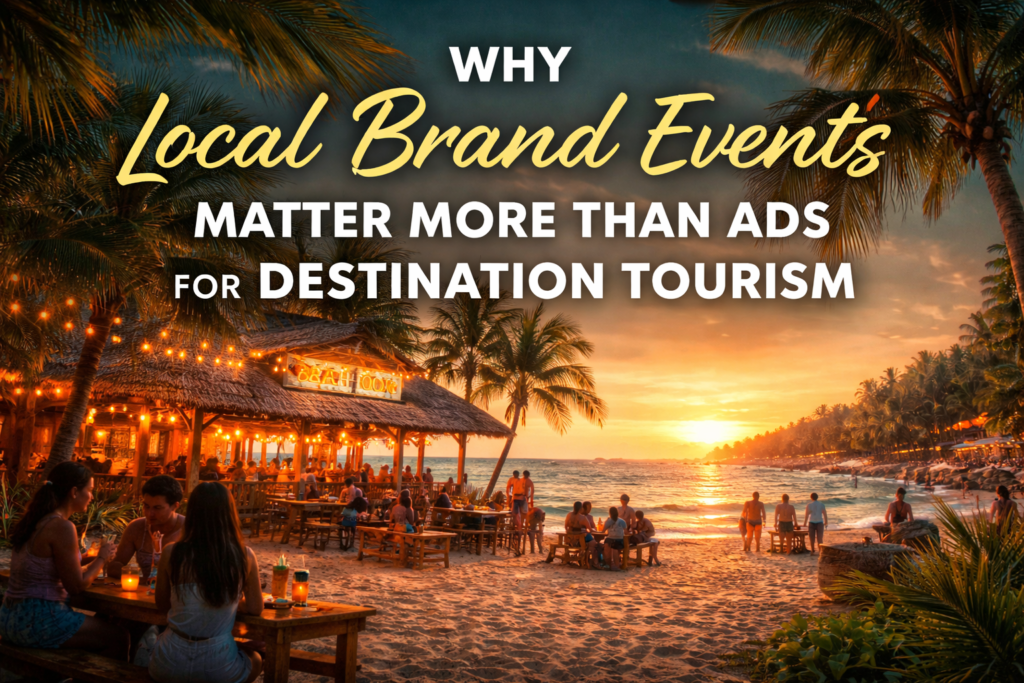
Why Local Brand Events Matter More Than Ads | The Modern Green The Modern Green Travel Modern • Stay Rooted Cultural Economics Why Local Brand Events Matter More Than Ads for Destination Tourism An economic lens on how nationally rooted brands and local venues drive nightlife, off-resort movement, and cultural trust in destinations like Placencia, Belize. By David Sims, CEO — The Modern Green Tourism is often marketed through glossy ads and influencer campaigns. But on the ground, destinations are shaped just as much—often more—by local brand activations and the venues that host them. In places like Placencia, nightlife is not secondary. It is where visitors integrate into local rhythms, where trust forms, and where tourism dollars circulate beyond resorts. Economic signal: Local events convert attention into real movement—foot traffic, staffing hours, vendor sales, and repeat visits. Where brand, venue, and destination intersect When brands like Belikin activate venues such as Barefoot Beach Bar, the impact extends into the nighttime economy and destination memory. These moments give travelers a reason to participate in a destination as it exists in real time—not just to observe it. They anchor memory, movement, and meaning. Independent cultural-economic commentary. The Modern Green is not affiliated with featured brands unless explicitly stated. Signal Snapshot Destination: Placencia, Belize Venue: Barefoot Beach Bar Signal Type: Local Brand Activation #TravelModernStayRooted #BarefootBeachBar #Placencia #Belize #CulturalTourism #ModernGreenSignals Explore more cultural signals Discover destinations through real moments, not marketing gloss. Visit The Modern Green

Read More »
Recharge

Why 2026 Is the Year You Need to Be in Ghana

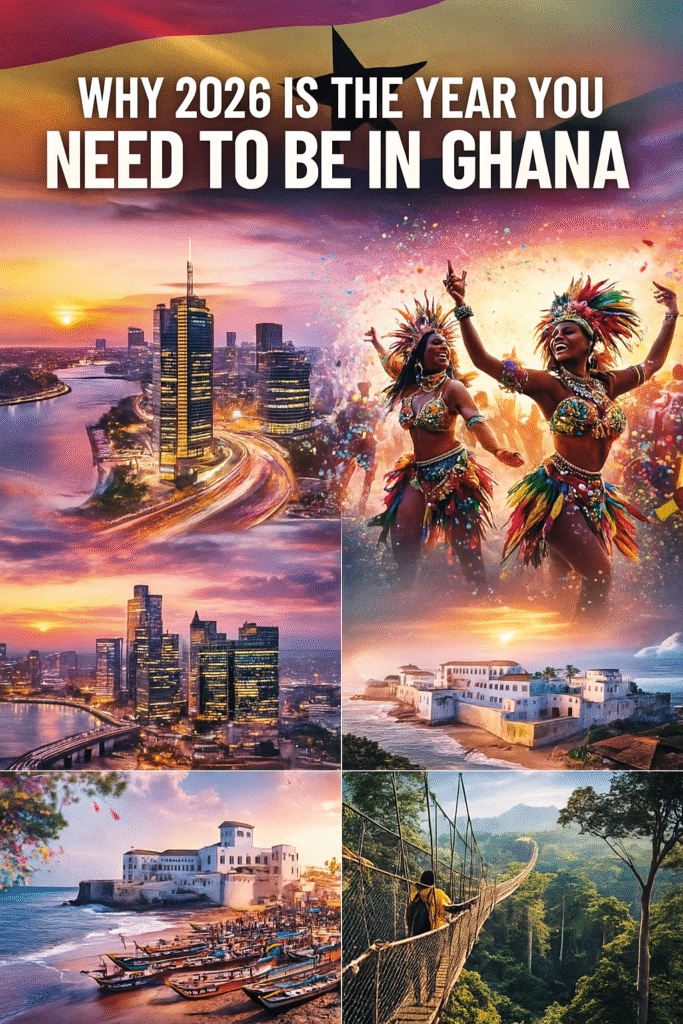
Culture Rising. Diaspora Returning. Festivals Expanding. And a New Wave of African Excellence. For years, Ghana has been the beating heart of West African culture — a place where history, innovation, and Black global identity intersect. But 2026 is different. Ghana is entering a renaissance, and the world is taking notice. Investment is rising. Cultural exports are booming. Tourism infrastructure is expanding. And travelers across the diaspora are choosing Ghana not just as a destination — but as a reconnection. From its powerful history to its futuristic energy, Ghana has positioned itself as the most important global travel destination for Black travelers in 2026. And this time, the movement isn’t only centered on “Detty December.” Ghana is becoming a year-round festival nation, with flagship events, cultural celebrations, homecoming experiences, and creative gatherings happening in every season. If you’re a Modern Green traveler — someone who values culture, community, joy, heritage, and elevation — then 2026 is your year. Let’s explore why. Ghana Is Experiencing a Cultural and Creative Boom Across Accra, Kumasi, Cape Coast, and Tamale, you’ll see a nation on the rise. New art districts. New digital start-ups. New resorts and restaurants. Even rural regions are developing new cultural centers and eco-tourism experiences. This surge isn’t accidental — it’s the result of: It means more options for travelers seeking meaningful experiences — not packaged tourism. Ghana Offers “Wakanda Energy” in Real Life The Modern Green traveler craves destinations that feel both ancestral and avant-garde — and Ghana is exactly that. It’s a place where you can experience: Accra’s modern skyline With beachfront lounges, rooftop bars, art galleries, tech hubs, and districts like Osu and East Legon that pulse with creativity. Cape Coast & Elmina’s ancestral pull The castles, forts, and oceanfront villages offer powerful moments of reflection and healing. Bolgatanga & Northern Ghana’s authenticity Handwoven crafts, earth-toned architecture, and the raw, beautiful landscape give travelers a deeper connection to West African tradition. Kumasi’s royal Ashanti heritage From Manhyia Palace to bustling Kejetia Market, a visit here is like stepping into a living history book. This duality — futuristic + rooted — is what makes Ghana visually special. It’s why content creators, travelers, entrepreneurs, and heritage seekers all find something here that feels like home. The Best Things to Do in Ghana (According to Travelers & Experts) Based on Travel Jewels, TripAdvisor insights & real traveler experiences Here are the must-experience highlights for 2026: • Kakum National Park Canopy Walk A rainforest adventure suspended 130 feet above the ground — one of West Africa’s most iconic views. • Cape Coast Castle A deeply emotional, educational, and powerful heritage site every diaspora traveler should experience at least once. • Elmina Castle & Fishing Village Historic beauty on the oceanside, with photogenic coastal scenes at every turn. • Makola Market (Accra) Bold colors, street vendors, fabrics, energy — one of Africa’s most vibrant marketplaces. • Labadi Beach & Bojo Beach Where local culture meets coastline relaxation — perfect for sunset-watching and nightlife. • Shai Hills Reserve Wildlife, caves, hiking, and landscapes just outside Accra — ideal for nature lovers. • Volta Region Waterfalls Wli and Tagbo waterfalls are among the most beautiful in West Africa. • Kumasi Cultural Center Crafts, Kente weaving demonstrations, and Ashanti storytelling in one place. • Bolgatanga’s Artisanal Markets Famous for handcrafted baskets, leatherwork, and pottery — a dream for authentic shopping. Ghana has something for every travel style — luxury, backpacking, culture, adventure, nightlife, wellness, and heritage travel. The Rise of Ghana’s Year-Round Festival Season Not just December — Ghana is becoming a cultural calendar. One major reason 2026 is the year to visit?Festivals. All year. Everywhere. For the past decade, December has been Ghana’s global draw — but now the calendar is expanding: APRIL — Karnival Kingdom 2026 (Accra) A multi-day explosion of culture, Carnival vibes, music, costumes, community, and Caribbean-African fusion.Dates: April 23–28, 2026Vibe: Diaspora unity + nightlife + cultural exchange JULY — Bakatue Festival (Elmina) Canoe processions, lagoon ceremonies, and celebrations marking the beginning of the fishing season. AUGUST — Homowo Festival (Accra & Ga communities) A powerful harvest celebration with drumming, dancing, tradition, and ancestral meaning. OCTOBER — Damba Festival (Northern Region) Colorful regalia, horse processions, royalty, and traditional storytelling through music. NOVEMBER–DECEMBER — Accra’s Peak Season Traditionally the global homecoming season with concerts, block parties, art fairs, Afro-futurist events, and diaspora celebrations that bring people from all continents. NEW TREND: Pop-Up Creative Festivals & Wellness Retreats 2026 is seeing more: In other words, Ghana is buzzing 12 months a year. Why the Modern Green Traveler Belongs in Ghana Your demographic — culturally conscious, value-driven, global, and adventurous — is perfectly aligned with what Ghana offers in 2026: ✔ Authenticity Real culture, real stories, real people. ✔ Affordability & lifestyle value Luxury options that don’t drain your account. Local experiences that feel premium. ✔ Community People who welcome you like family, not tourists. ✔ Heritage & meaning For many Black travelers, being here feels like a personal journey and a historical connection. ✔ Content & creativity Ghana is a photographer’s dream — color, architecture, beaches, art, and culture everywhere. ✔ Festival energy all year Perfect for travelers who want to plan trips outside the December crowd. Ghana represents everything the Modern Green traveler values: culture, safety, connection, authenticity, and elevation. How to Plan Your Ghana Trip for 2026 Best Times to Visit Budget Range Where to Stay Travel Tips Final Word: Ghana 2026 Is Not Just a Trip — It’s a Movement If you want a destination that gives you culture, nightlife, nature, history, premium experiences, and global Black connection — Ghana is the place to be in 2026. It’s the new capital of Black excellence.A year-round festival nation.A homecoming for the diaspora.And the perfect destination for Modern Green travelers seeking joy, heritage, and adventure. Book the flight.Pack the curiosity.Experience the moment. Ghana is waiting for you.

Read More »
Luxury

“They Not Like Us? How Global Travel Reveals a Diaspora the Tourism Industry Still Overlooks.”

Although Black travelers generate billions in tourism revenue and shape culture in destinations worldwide, they remain largely invisible in the imagery that defines global travel. Across Latin America, Europe, Africa, and the Caribbean, the presence of the Black diaspora is unmistakable to anyone who moves beyond resort walls — yet almost entirely absent from mainstream tourism marketing. This piece examines that disconnect, the structural assumptions behind it, and why new platforms like The Modern Green are working to make visible what travel has always revealed.

Read More »
Recharge

✈️ Why We Travel: Reclaiming Our Global Presence & Power

Travel is more than movement — it’s a return. A return to our global identity, to the rhythm and creativity we’ve poured into every corner of the world. The Modern Green was built to remind us that as Black travelers, we don’t just visit places — we shape them. Every destination we touch becomes part of our legacy. From Lisbon to Lagos, from Cartagena to Cape Town, our presence inspires culture, sparks collaboration, and expands what empowerment looks like on a global scale.

Read More »
Travel

✨Top 5 Budget-Luxury Destinations for Black Travelers in 2025

Where Culture Meets Class — Without Breaking the Bank Introduction Luxury doesn’t always mean $1,000-a-night suites and private jets. For Black travelers, luxury isalso about peace, safety, culture, aesthetics, and intentional service—all without drainingyour savings account. “Affordable luxury” is trending across social feeds, particularly amongBlack millennial and Gen X travelers who are building wealth and collecting passport stamps. Here are the top destinations for 2025 where you can live luxuriously on a realistic budget,enjoy cultural richness, and be fully celebrated—not tolerated. 🌴1. Cartagena, Colombia – Colonial Glam on aBackpacker Budget Cartagena gives you rich Afro-Caribbean culture, stunning ocean views, and rooftop dining—often at half the price of Miami. Boutique hotels in the historic district offer rooftop pools, spaservices, and complimentary breakfast starting at $130/night. How to get the luxury without the price: What you can get under $200/day: Private boat split with friends, rooftop dinner, and a sunsetcarriage ride through the Old Town. 🍇2. Portugal – European Elegance Meets African Roots Lisbon and Porto are emerging as wallet-friendly European cities with deep African history,Black expat communities, and Michelin-level cuisine at street food prices. Luxury on a budget tips: Luxury experience: Book a Douro Valley wine tasting tour with transport included for under$100 — something that would cost $400+ in Napa. 🌊3. Bali, Indonesia – Private Villas for the Price of a MotelRoom Bali is a global hotspot for luxury wellness seekers. Here, your dollar stretches so far, you canhave your own villa with a pool and staff for the cost of a U.S. chain hotel. Estimated Spend: $75–$150 per night for a private villaLuxury hacks: Budget luxury moment: Floating breakfast in your pool at sunrise. 🌿4. Costa Rica – Eco-Luxury with Afro-Latino Soul From Puerto Viejo to Limón, the Caribbean side of Costa Rica offers rich Black culture,stunning beaches, eco-lodges, and wellness retreats that feel exclusive without premium resortprices. What makes it budget luxury: Cost-saving tip: Travel during rainy season (green season) to get nightly rate discounts up to40%. 🕌5. Marrakech, Morocco – Royal Riad Luxury for Less Imagine staying in a palace-style riad with mosaic tiles, silk cushions, courtyards with fountains,and rooftop dining—all for less than a chain hotel in Atlanta. Luxury on a budget breakdown: Cultural luxury: Experience African hospitality blended with Middle Eastern elegance—and betreated like honored royalty. 🔑Luxury Travel Hacks That Save You Thousands Hack Savings SavingsUse credit card rewards + flight deals $300–$800 off airfare $300–$800 off airfareBook shoulder season instead of high season 30%–50% off hotel rates 30%–50% off hotel ratesStay in boutique hotels or villas instead of big-name resorts Better experience + lower cost Better experience + lower cost Travel with 2–4 friends to split private drivers, yachts, orchefsTurns a $400 activity into $100each ✨Final Word Luxury isn’t just about what you spend—it’s about how you experience it. As Black travelerscontinue to redefine what global luxury looks like, these destinations allow you to show up fully,experience deeply, and enjoy every moment without financial stress. Affordable luxury is not a compromise. It’s the new standard.

Read More »