

There is nothing wrong with loving a resort.
The comfortable room. The pool you have already mentally claimed. The convenience of knowing where breakfast is and who to call when you need something. Sometimes, the purpose of a vacation really is to rest.
But perhaps you have also felt that small pull of curiosity. What is the neighborhood beyond the entrance like? Where would you eat outside the hotel’s restaurant list? Who could introduce you to the music, businesses, celebrations, and everyday experiences that made you curious about this destination in the first place?
That curiosity does not mean you booked the wrong vacation. It might simply mean you are ready to experience more of it.
The next step is not necessarily abandoning the resort. It is learning how to travel beyond it—and deciding whether a stay within a local community might suit you, too.
The question is not whether you are adventurous enough. It is what would help you feel informed, connected, and comfortable enough to try.
You Do Not Have to Choose Between Comfort and Connection
Let’s retire the idea that meaningful travel requires discomfort. You do not have to give up a comfortable bed, spend your entire vacation hiking, or accept an experience that does not fit your interests because someone calls it authentic.
You can want air-conditioning, a beautiful room, good food, and an evening out—and still want to learn about the people and culture around you. Luxury on a budget and community connection do not have to be competing travel goals.
Your version might be a boutique hotel near neighborhood restaurants, a guesthouse with an attentive host, or a resort stay with two carefully planned days exploring beyond the property. Off the beaten path does not have to mean remote. It can mean stepping beyond your usual itinerary.
Neither a resort nor a neighborhood can represent an entire destination. Think of exploring beyond the property as widening your view, not finding the only “real” version of a place.
Make the First Leap Smaller
Moving from an all-inclusive stay to an independent one can feel like taking on a different vacation. Suddenly, transportation, meals, neighborhoods, and backup arrangements become your responsibility. Rather than changing everything at once, consider changing one thing at a time.
Start with an experience
Keep your accommodation and arrange a daytime outing with a well-researched local provider. Try a cooking class, an artist’s workshop, a food walk, or a cultural experience led by people connected to the tradition being shared. Confirm the meeting point, total price, duration, and return transportation in advance.
Consider a split stay
When you feel ready, spend part of a trip in a locally operated hotel or guesthouse. Leave enough time to settle in rather than changing accommodations every day. You are learning what feels right for you—not proving how much uncertainty you can handle.
Build toward a community-based stay
Use what you learn to choose a neighborhood, host, and transportation arrangement for a longer visit. You may discover that an independent stay suits you, or that a resort with local experiences remains your preferred balance. Both are valid choices.
Your first successful step might simply be enjoying lunch somewhere new and returning to your accommodation feeling more capable than when you left. That counts.
Choose the Neighborhood, Not Just the Room
A beautiful listing can show what a room looks like. It cannot answer every question about staying there. Research the location, nearby services, transportation, and recent guest experiences. Ask about staffed assistance, secure entrances, working locks, fire safety, and accessibility features. The U.S. State Department’s lodging safety guidance also recommends having backup accommodation options.
Then connect the property to your actual vacation. How will you get back after dinner? Is the restaurant you saved genuinely nearby, or does reaching it require a drive? Who responds if you arrive late or your transportation falls through?
Compare the total cost, not just the nightly rate. Include airport transfers, everyday transportation, meals, taxes, cleaning charges, and activities. A lower room price is not automatically a better deal after those expenses are added.
Do not assume every vacation rental is locally owned or that every small property has strong community ties. Ask who operates it and which local businesses it works with. Leaving the resort should not mean leaving your standards behind.
Build Community—and Take Time to Build Trust
In the travel reflections shared for this editorial, local contacts helped travelers through moments of illness or finding their way in unfamiliar surroundings. Those experiences highlight something an itinerary cannot fully capture: the value of knowing whom to contact when plans change.
The Modern Green founder David Sims brings civilian and military experience to this conversation. His reflections emphasize listening, finding common ground, and making connections rather than passing through a destination without engaging with it.
Still, a friendly conversation is a beginning—not a background check. A large social following is not proof of reliability. Sharing your ethnicity, nationality, or interests does not automatically make someone a trustworthy service provider.
Ask for recent, specific recommendations from people who actually used the service. Confirm the provider’s identity, business details, fees, and arrangements. For drivers, check the destination’s requirements and reputable transportation options. The State Department’s transportation guidance cautions that informal taxis and minibuses can carry risks that vary by location.
Social groups and community forums can help you ask better questions: Who used this driver recently? What did the price include? How were changes handled? For a first meeting, choose a public setting and keep your own way to leave.
Across the Diaspora, Connection Begins With Listening
For Black American travelers exploring Afro-Caribbean communities, a conversation about family, food, music, migration, or identity can invite a moment of recognition. Something unfamiliar may also feel close to home.
Let that recognition open a conversation rather than end it. Shared Black identity does not mean identical histories or experiences. Ask what a celebration means, how a dish is prepared at home, or which local artists and historians visitors should know. Leave room for people to explain themselves.
Consider Hopkins, Belize, as one example. The Belize Tourism Board’s guide to Hopkins highlights Garifuna cooking experiences and opportunities to learn drumming and musical traditions. That provides a starting point for learning from local knowledge, rather than simply watching a performance without its context.
Approach such experiences as an invited guest and paying participant—not as someone entitled to photographs, private spaces, or personal stories. Ask permission and respect the answer.
Cultural awareness belongs in preparation, too. The State Department advises travelers to research how race, ethnicity, and nationality may affect their experience abroad . Travelers of every background can practice the same approach: listen carefully, recognize differences, and allow people to define themselves.
Build a Safety Plan That Leaves Room for Enjoyment
Safety concerns are valid. Dismissing them does not make someone adventurous, and acknowledging them does not mean the world should be avoided. Turn a broad concern into practical questions: What conditions affect this destination? How will I move around? Who knows my plans? What will I do if something changes?
Understand local conditions before you commit
Check entry requirements, local laws, weather alerts, and current destination guidance. Review local reporting and embassy notices about demonstrations or other disruptions; check whether elections or major gatherings overlap your itinerary. The international travel checklist brings together official planning resources and explains the alerts available to travelers.
Political conversations do not have to become debates. Listen respectfully, avoid confrontation, and step away from situations that feel uncomfortable. Awareness is useful; winning an argument is not a travel requirement.
Read beyond the advisory color
The U.S. State Department’s travel advisory system has four levels: Level 1: Exercise Normal Precautions; Level 2: Exercise Increased Caution; Level 3: Reconsider Travel; and Level 4: Do Not Travel.
Read the full advisory, including geographic distinctions and recommended precautions, rather than relying only on its color or a social-media headline. A positive review or reassuring contact should not be used to dismiss an official warning.
Stay connected before you need help
Confirm that your phone plan supports the calls, messages, and data you need. Save your accommodation’s address and important contacts, with a separate copy in case your phone is unavailable. Learn the destination’s emergency numbers before arrival; emergency dialing differs by country . Do not assume 911 works everywhere.
Share your itinerary with someone you trust and agree on a check-in routine. Decide how you will return from an evening out before the evening begins. U.S. travelers should also consider the free Smart Traveler Enrollment Program (STEP) , which provides embassy and consulate alerts and helps officials contact enrolled travelers or their emergency contacts.
Plan for health needs, too
Confirm what your health insurance covers internationally and review travel medical and evacuation coverage for your destination and activities. Trip-cancellation protection is not the same as medical coverage; the State Department explains these differences in its travel insurance guidance . Knowing a helpful host is valuable. Knowing how to obtain appropriate medical care is essential.
Use The Modern Green to Turn Curiosity Into a Plan
Begin with one experience you genuinely want to have. The Modern Green is a discovery platform: use it to explore people, places, and possibilities, then confirm services, reservations, prices, and support directly with the relevant provider.
Discover local vendors
Explore businesses and services that fit your interests, from guides and drivers to food and cultural experiences. Use listings and recommendations to begin a conversation. Ask what informed a recommendation and how recently the service was used. A listing is a starting point—not a guarantee of safety or price.
Find a reason to step outside
Explore community-posted festivals, club events, and social experiences. Your introduction to a destination might be a carnival, a cooking class, a tour, or an evening of music. Check what is available for your dates and confirm the venue, organizer, admission terms, and transportation before committing.
Learn from the community
Explore ambassador profiles and community contributions for perspectives that help you prepare. Ask practical questions rather than assuming someone is available for immediate assistance. Introductions may lead to an evening gathering or a prearranged experience, but always confirm that visitors are welcome. A connection is not permission to bypass opening hours or private boundaries.
Connect with a travel curator or agent
Look for regional expertise and explain your priorities: comfort, reliable transportation, accommodation guidance, and a realistic total budget. Ask what the professional knows firsthand, what support is included, and who handles reservations, changes, and emergencies.
Prepare with practical travel resources
The resource hub links to the U.S. Embassy Directory and official travel advisories. The site’s Emergency Contacts Abroad section is another planning starting point, but verify each emergency number against current official guidance for the specific country. Save the contact details for the embassy or consulate serving your destination.
Use World Monitor for broader context
This separate, external dashboard aggregates global news and event information, including geopolitical and disaster-related signals, as described in its project documentation . Treat it as a supplementary awareness tool—not a neighborhood safety assessment. Verify information affecting your plans with official weather services, local authorities, and embassy alerts.
The aim is not to collect more tabs on your phone. It is to arrive with useful answers.
Let Your Spending Reflect What You Want to Support
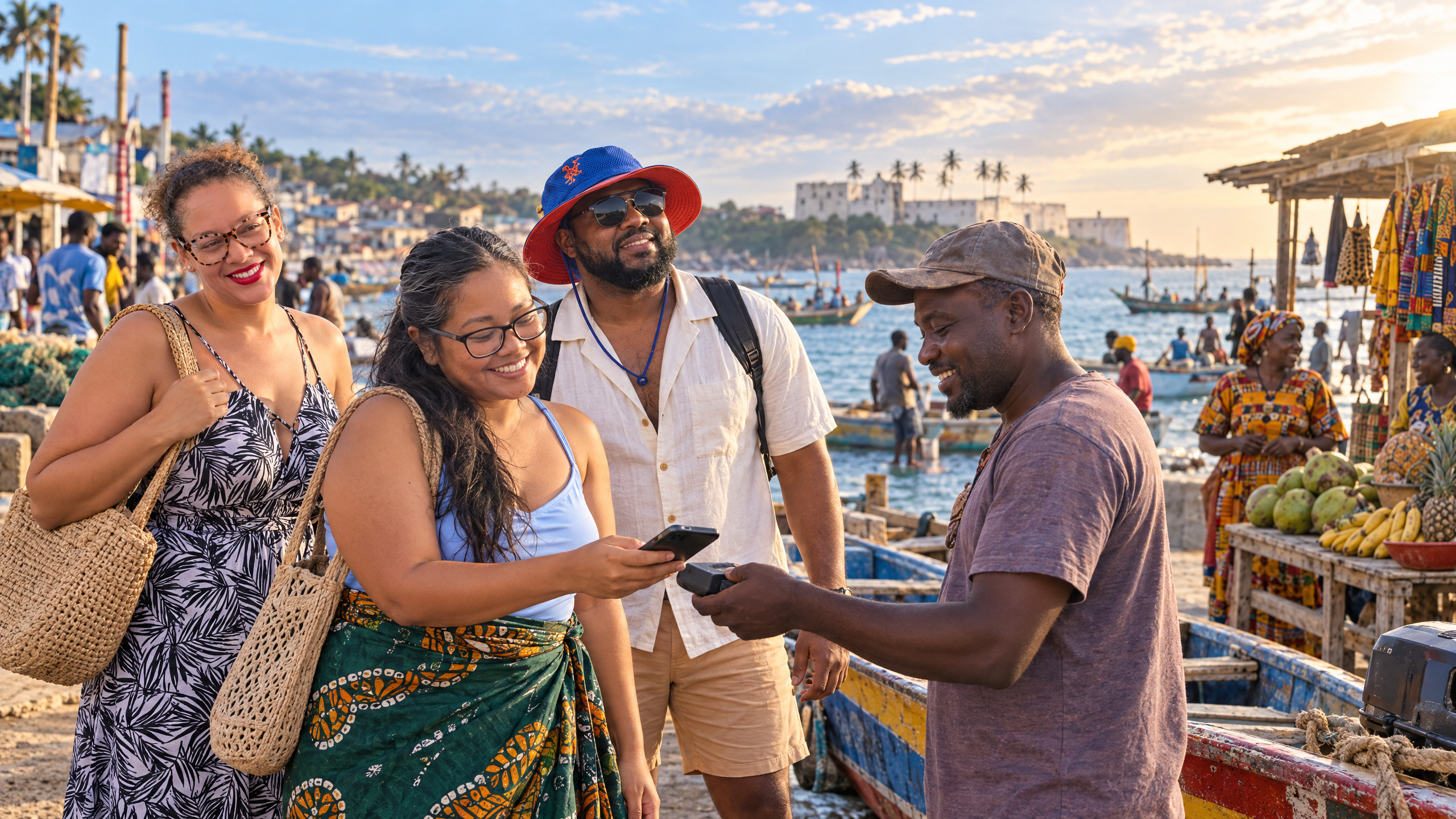
Exploring beyond a resort gives you an opportunity to be intentional about whom you pay. Choose a meal from an independently operated restaurant, hire a local guide, book a workshop with its instructor, or buy an item directly from its maker.
Ask about ownership, pricing, and what the service includes. Agree on the currency, transportation charges, deposits, and cancellation terms before committing. Clear information is more useful than a promise that every local transaction will be cheaper.
Fair exchange does not mean demanding the lowest possible price. Cultural connection does not entitle a visitor to a discount. Where bargaining is customary and welcome, keep it respectful. Where prices are fixed, respect that too. Someone else’s livelihood should not become your vacation challenge.
Be equally thoughtful about what you share afterward. Ask before photographing people, respect private spaces, and credit the businesses and individuals involved when they welcome that visibility.
The Leap Is Toward Connection, Not Away From Common Sense
You do not need to become a completely different traveler to experience a destination differently. Perhaps your next trip still includes the resort, the pool, and the room with the view. Perhaps it also includes a neighborhood meal, a cultural experience led by someone who knows its meaning, and a conversation you would otherwise have missed.
Perhaps the trip after that includes a locally operated hotel—and enough familiarity to feel comfortable making that choice. You do not have to prove you can travel without support. Build the support. Ask the questions. Respect your limits.
Then contribute something useful for the next traveler: an honest account of where you stayed, how you got around, what you paid, who helped, and what you would approach differently. A thoughtful recommendation can give someone else a better starting point.
The goal is not to leave comfort behind. It is to make room for connection alongside it.
Travel Modern. Stay Rooted.
Where Will Your First Step Take You?
Start with a local business, an experience that interests you, or the information you need to feel prepared.
Already taken the leap? Share your experience with The Modern Green community and explain what helped you feel ready. Member sign-in may be required.

Author: Nia The Modern Green
Nia is The Modern Green’s Digital Travel Storyteller, created to help travelers discover the people, culture, local businesses, and authentic experiences that give destinations their character. Curious, observant, and respectful, Nia believes meaningful travel begins with understanding the communities behind the destination. She highlights local entrepreneurs, cultural traditions, hidden gems, and stories that travelers may otherwise overlook. Her purpose is to encourage responsible exploration, support local businesses, celebrate heritage, and create stronger connections between travelers and the communities they visit.